

Leaves are starting to drop, and every one that lands in your pond is headed for the same place: the bottom. If your pond has been getting shallower, smellier, or weedier year after year, the culprit is probably muck. Here’s what it actually is, why it matters more than most pond owners realize, and what you can do about it this fall.
What Is Pond Muck?
Muck is the dark, soft, often smelly layer that collects on the bottom of ponds and lakes. It’s mostly partially decomposed organic material: fallen leaves, grass clippings, dead algae and weeds, fish waste, uneaten fish feed, and anything that washes in with runoff. That organic material mixes with inorganic sediment like sand, silt, and clay that erodes into the pond over time.
Every pond produces some organic debris. That’s normal. The problem starts when debris lands on the bottom faster than it can break down. Year after year the layer gets thicker, and the pond slowly gets shallower.
A quick way to check: push a long pole or rake handle into the bottom near the shore. If it slides through several inches of soft, black material before hitting firm ground, you have a muck layer. A rotten egg smell when the bottom is disturbed is another telltale sign.
Why Muck Builds Up: The Oxygen Problem
Organic material breaks down in two very different ways depending on how much oxygen is available at the bottom of your pond.
- With oxygen (aerobic decomposition): Aerobic bacteria break down organic matter quickly and cleanly, converting it mostly into carbon dioxide and water.
- Without oxygen (anaerobic decomposition): A different group of bacteria takes over. They work far more slowly, so material piles up instead of disappearing, and they produce byproducts like hydrogen sulfide (the rotten egg smell) and methane.
Here’s the catch. Decomposition itself uses up oxygen. In summer, many ponds stratify: a warm upper layer sits on top of a cold bottom layer, and the two don’t mix. The bottom runs out of oxygen, decomposition slows down, and the muck keeps growing. Deeper ponds that are poorly mixed in summer are especially prone to this.
Other conditions that speed up muck accumulation include:
- Trees along the shoreline dropping leaves directly into the water
- Grass clippings blown or mowed into the pond
- Fertilizer and manure runoff from lawns, fields, or pastures
- Overstocked fish populations and overfeeding
- Dense weed growth that dies back every fall
- Livestock wading in the pond
Why Muck Is More Than Just an Eyesore
Muck isn’t just unpleasant to step in. It affects almost every part of your pond’s health.
1. It feeds weeds and algae
Muck is essentially a nutrient bank. When the bottom goes low on oxygen, phosphorus and nitrogen locked in the sediment are released back into the water. Lake scientists call this internal nutrient loading, and it’s one of the main reasons algae blooms and weeds keep returning even after you’ve treated them. (We covered this cycle in more detail in Why Do Pond Weeds Keep Coming Back?)
2. It steals oxygen from your fish
Decomposing muck constantly consumes dissolved oxygen. Combined with hot weather, cloudy days, or a sudden turnover of the water column, that oxygen demand can push a pond into a fish kill.
3. It makes your pond shallower
Every inch of muck is an inch of water depth you lose. Shallower water warms faster, grows more weeds, and holds less oxygen, which leads to even more muck. It’s a cycle that feeds itself.
4. It hurts spawning and fish habitat
Bass and bluegill need firm bottom areas to build nests. A soft layer of muck smothers those spawning beds and reduces the success of your fish population over time.
5. It smells
That rotten egg odor near the shoreline or when you wade in is hydrogen sulfide produced by anaerobic decomposition. It’s a clear sign the bottom of your pond isn’t getting enough oxygen.
How to Get Rid of Pond Muck
There’s no single magic fix, but there is a proven approach: add oxygen, add bacteria, and cut off the supply. For severe cases, physical removal may also be part of the plan.
Step 1: Aerate the bottom
Aeration is the foundation of any muck reduction program. A bottom diffused aeration system pumps air to diffusers on the pond floor, which lifts and circulates water from the bottom up. That breaks up stratification, brings oxygen to the sediment, and lets aerobic bacteria do their job. Some industry sources estimate aerobic decomposition to be roughly 10 times faster than decomposition without oxygen.
Aeration also helps prevent fish kills, reduces odors, and limits the nutrient release that fuels algae.
Important: If your pond has never been aerated, don’t switch a new system on full time right away. Suddenly mixing low oxygen bottom water into the whole pond can stress or kill fish. Extension specialists recommend starting with short run times (around 15 minutes on day one) and doubling the run time each day until the system runs continuously.

Not sure which system fits your pond? Our Pond Aeration Guide breaks down bottom diffused, surface, solar, and wind options, or you can browse our full line of pond and lake aerators. Solar aerators are a great fit for remote ponds without access to power.
Step 2: Put beneficial bacteria to work
Beneficial bacteria products add concentrated strains of aerobic bacteria that digest organic material. They release enzymes that break down cellulose, proteins, and fats into simpler compounds, and they compete with algae for the same excess nutrients.
Two things to know so you set the right expectations:
- Bacteria only digest organic material. They can’t eat sand, silt, clay, or rocks. If your “muck” is mostly eroded soil, bacteria will do little on their own.
- Bacteria work best with oxygen and warm water. Most products are most effective when water temperatures are above 50°F, and they work far better paired with aeration.
We carry two options:
- Lake & Pond Muck Pellets sink straight to the bottom and deliver bacteria, trace minerals, and an organic catalyst right where the muck is. They’re ideal for targeting problem areas like swimming areas, docks, and beaches.
- Beneficial Pond & Lake Bacteria comes in water soluble pouches that treat the whole water column, breaking down excess nutrients, reducing odors, and improving clarity.
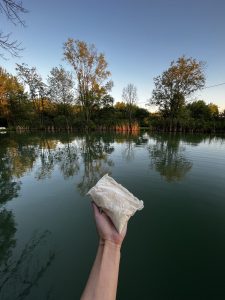
Both are safe for people, fish, livestock, and wildlife. For an all in one approach, our Pond Care Treatment Package combines beneficial bacteria with barley and pond dye.
Step 3: Cut off the supply
Removing existing muck only helps if you stop adding more. A few simple habits make a big difference:
- Manage fall leaves. Rake leaves away from the shoreline before they blow in, and skim or rake floating leaves out of the water. An aquatic pond rake makes this much easier.
- Keep grass clippings out. Mow so clippings discharge away from the pond, and bag them near the shoreline.
- Leave a buffer strip. A strip of unmowed native vegetation around the pond filters runoff and traps sediment and nutrients before they reach the water.
- Go easy on fertilizer. Avoid fertilizing lawns or fields that drain directly into the pond.
- Don’t overfeed. Feed only what your fish finish in about 5 to 10 minutes, and stop feeding when water temperatures drop in the cold months.
- Stay on top of weeds. Every weed that dies back in the fall becomes next year’s muck. Grass carp are a natural, long term way to keep vegetation in check.
- Keep livestock out. Fencing and a separate drinking station prevent trampling, erosion, and manure from entering the water.
Step 4: Consider physical removal for severe cases
If your pond has lost several feet of depth, dredging or draining and excavating may be the fastest way to reset it. It’s effective, but it’s also the most expensive and disruptive option. National estimates put residential pond dredging anywhere from about $2,500 to $40,000 depending on pond size, access, method, and how much material needs to be removed and hauled away. Without aeration and prevention afterward, muck will start building again.
Muck Removal Options at a Glance
| Method | Best For | Speed | Relative Cost |
|---|---|---|---|
| Bottom diffused aeration | Every pond; prevention and long term reduction | Gradual (seasons) | $$ one time, low running cost |
| Muck pellets and beneficial bacteria | Organic muck, targeted areas, boosting aeration results | Gradual (weeks to seasons) | $ ongoing |
| Prevention (leaves, runoff, feeding) | Every pond | Stops new buildup | Minimal |
| Dredging or excavation | Severe buildup, major depth loss, inorganic sediment | Immediate | $$$$ |
How Fast Will You See Results?
Muck took years to build up, so plan on reducing it over seasons, not days. Results vary widely based on pond size, water temperature, how much of the muck is organic, and how much debris keeps coming in. That said, the combination works: in a 2014 field study on a 9 acre Michigan lake, aeration plus bacterial muck pellets reduced average muck depth by about 6 inches over a single season.
You’ll often notice other improvements first: less odor, clearer water, fewer algae blooms, and firmer footing near the shore.
Why Fall Is the Time to Start
Fall is when the biggest load of organic material enters most ponds in our region. Getting ahead of it now pays off next summer:
- Remove leaves before they sink and start decomposing.
- Get one more round of bacteria in while water temperatures are still above 50°F.
- Install aeration now so it’s ready to go in spring. (In winter, place diffusers in shallower water or reduce run times so part of the pond keeps its warmer, stable bottom layer for fish, and watch for thin ice around open water.)
- Plan to restart bacteria treatments in spring as soon as the water warms up.
Frequently Asked Questions
Is pond muck harmful to fish?
Muck itself isn’t toxic, but the low oxygen and hydrogen sulfide produced by decomposing muck can stress fish and contribute to fish kills, especially during hot weather or seasonal turnover.
Can beneficial bacteria remove all the muck in my pond?
Bacteria can reduce organic muck over time, especially with aeration, but they can’t break down sand, silt, or clay. If much of your sediment is eroded soil, physical removal may be needed.
How often should I apply muck pellets?
Follow the label for your pond size. Our Muck Pellets are typically applied weekly for the first four weeks, then as needed through the season. They work best when water temperatures are above 50°F.
Do I need aeration if I’m using bacteria?
You’ll get much better results with it. The bacteria that digest muck need oxygen, and aeration delivers it right to the bottom where the muck is.
Should I remove leaves from my pond in the fall?
Yes. Leaves are one of the biggest sources of muck. Keeping them out of the water, or skimming them before they sink, is one of the easiest ways to slow buildup.
Ready to Tackle Your Muck?
Whether you’re dealing with years of buildup or just want to stay ahead of this fall’s leaves, the right combination of aeration, bacteria, and prevention will get your pond back on track. Shop our pond care products and aeration systems, or contact our team for help building a plan for your pond.