
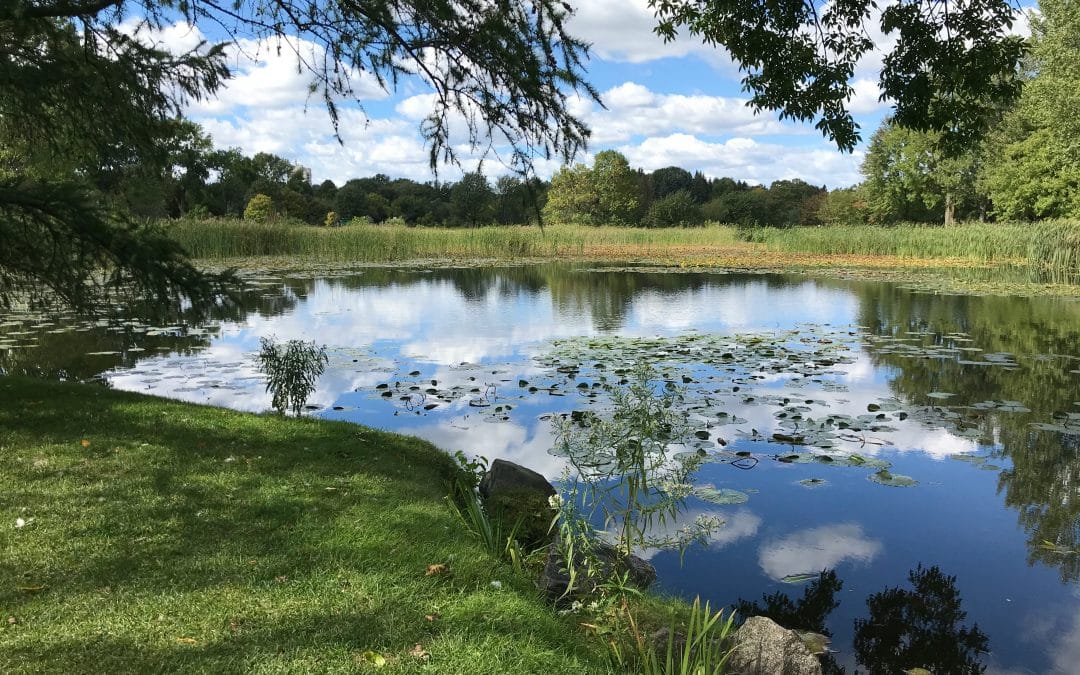
If your pond is choked with weeds, grass carp are one of the most natural — and cost-effective — solutions available to farmers and ranchers. But here’s the thing: grass carp don’t eat everything. They’re selective feeders, and stocking them without knowing what’s growing in your water is a gamble. This guide walks you through the plants grass carp prefer, how to spot them, and what they’ll leave untouched.
How Grass Carp Feed
Grass carp (Ctenopharyngodon idella) are herbivores that graze on aquatic vegetation much the way cattle graze a pasture. They prefer soft, non-fibrous, submerged plants — the kind that grow entirely underwater. They work from the top of the water column down, targeting the most tender growth first.
Water temperature drives their activity. They’re most aggressive feeders when pond temperatures are between 70°F and 86°F, making late spring through early fall your most productive window. In cooler months, their appetite drops significantly.
Stocking rates typically run 5 to 12 fish per acre, depending on how severe your weed problem is. A rate of 10–12 per acre will generally eliminate most submerged vegetation within two years.
Important: Many states require triploid grass carp (sterile fish that can’t reproduce). Check your state regulations before purchasing.
Plants Grass Carp Will Eat — and How to Identify Them
These are the weeds grass carp target first. If you see any of these in your pond, grass carp are likely a good fit.

Hydrilla (Hydrilla verticillata) One of the most aggressive aquatic invasives in warm climates. Hydrilla can grow up to an inch per day and fill an entire water column if left unchecked. Look for whorls of small, saw-toothed leaves arranged in groups of 4–8 around a slender stem. It’s often the first plant you’ll feel tangling around your feet when wading. Color ranges from bright green to olive. Grass carp consider it a top-priority food source.
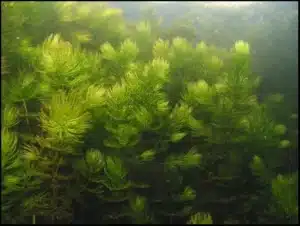
Coontail / Hornwort (Ceratophyllum demersum) A free-floating plant with no true roots — it just drifts in the water column. The name comes from the way leaves cluster densely at the tips of each branch, resembling a raccoon’s tail. Leaves are stiff and forked, darker green than most aquatic plants. It’s often confused with watermilfoil, but coontail’s leaves are thicker and do not feather out into multiple delicate leaflets. Grass carp readily eat it.
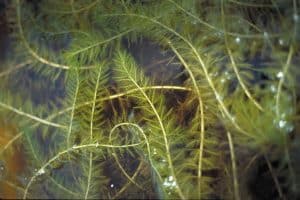
Eurasian Watermilfoil (Myriophyllum spicatum) An invasive weed that forms dense mats just below the surface, blocking sunlight and crowding out native plants. Look for feathery, reddish-green stems with 12–21 pairs of thin leaflets arranged around the stem like a bottle brush. When lifted out of the water, the leaves collapse limply — unlike coontail, which holds its shape. Grass carp will consume watermilfoil, though it’s not their top preference.

Pondweed (Potamogeton spp.) A native plant family with many species, most of which grass carp eat readily. Common varieties have long, ribbon-like submerged leaves that wave in the current. Some species also produce floating oval leaves near the surface. Stems are slender and often branching. American pondweed and bushy pondweed are among their favorites.

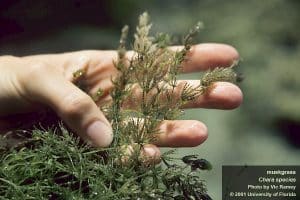
Chara / Muskgrass (Chara spp.) Often mistaken for algae, chara is actually a multi-cellular plant. It grows low on the pond bottom and has a rough, crusty texture due to calcium deposits. The most reliable identifier: it smells like garlic or sulfur when crushed. Grass carp love it and will clear chara quickly once stocked.
Plants Grass Carp Will NOT Control
Don’t stock grass carp expecting them to fix these problems — they’ll be ignored:
- Cattails — Tall, fibrous emergent plants with the distinctive brown “hotdog” seed heads. Too tough and woody for grass carp.
- Bulrush and sedge — Shoreline rushes with round or triangular stems. Grass carp avoid the fibrous structure.
- Waterlilies and spatterdock — Floating-leaf plants with tough, waxy pads. Not on the menu.
- Filamentous algae — The slimy, hair-like green mats that form on rocks and in shallow areas. Grass carp rarely touch this.
- Alligatorweed, torpedograss, smartweed — These emergent or semi-emergent plants are generally avoided.
If these are your primary problem, herbicide treatments or mechanical removal are more effective solutions.
Before You Stock: Know Your Pond
The single most important step before stocking grass carp is plant identification. Stock them for the wrong weeds and you’ll spend money without results. Here’s how to get a clear read on what’s in your water:
- Wade the edges and collect samples — Pull up several plants from different areas and lay them out for comparison.
- Contact your county extension agent — Most states offer free or low-cost aquatic plant ID through local agricultural extension offices. Bring photos or physical samples.
- Use your state’s fish and wildlife agency — Many offer pond management consultation specifically for farmers and ranchers.
- Check for invasives — Hydrilla and Eurasian watermilfoil are regulated in many states. Reporting them may get you additional support.
Grass carp are most effective when used as part of a broader pond management strategy — combined with proper fertilization, shoreline maintenance, and awareness of your local regulations.
Have questions about pond weed management on your property? Contact us: http://midatlanticstocking.com