

Fish pond owners and aquaculture farmers must start preparing their ponds and fish for the colder months ahead. Proper preparation ensures that your fish survive winter’s challenges and emerge healthy in the spring. Here’s a guide on the essential steps to take as temperatures begin to drop, focusing on feeding adjustments, pond maintenance, and monitoring fish health.
Adjust Feeding Practices
As water temperatures cool down, fish metabolism slows, particularly for species like trout, bass, and catfish. Fish become less active and require less food, so it’s important to adjust feeding practices accordingly:
- Monitor Water Temperature: Fish metabolism is directly tied to water temperature. Once water temperatures drop below 50°F (10°C), it’s time to reduce feeding. For warm-water species like largemouth bass and catfish, stop feeding once temperatures consistently reach 50°F. Cold-water species, like trout, may still require some food, but in much smaller amounts.
- Feed in Small Quantities: Overfeeding during this time can cause uneaten food to sink to the bottom and decay, leading to water quality issues. Feed only what the fish will consume in a few minutes and reduce the frequency to a few times per week.


Pond Maintenance and Cleaning
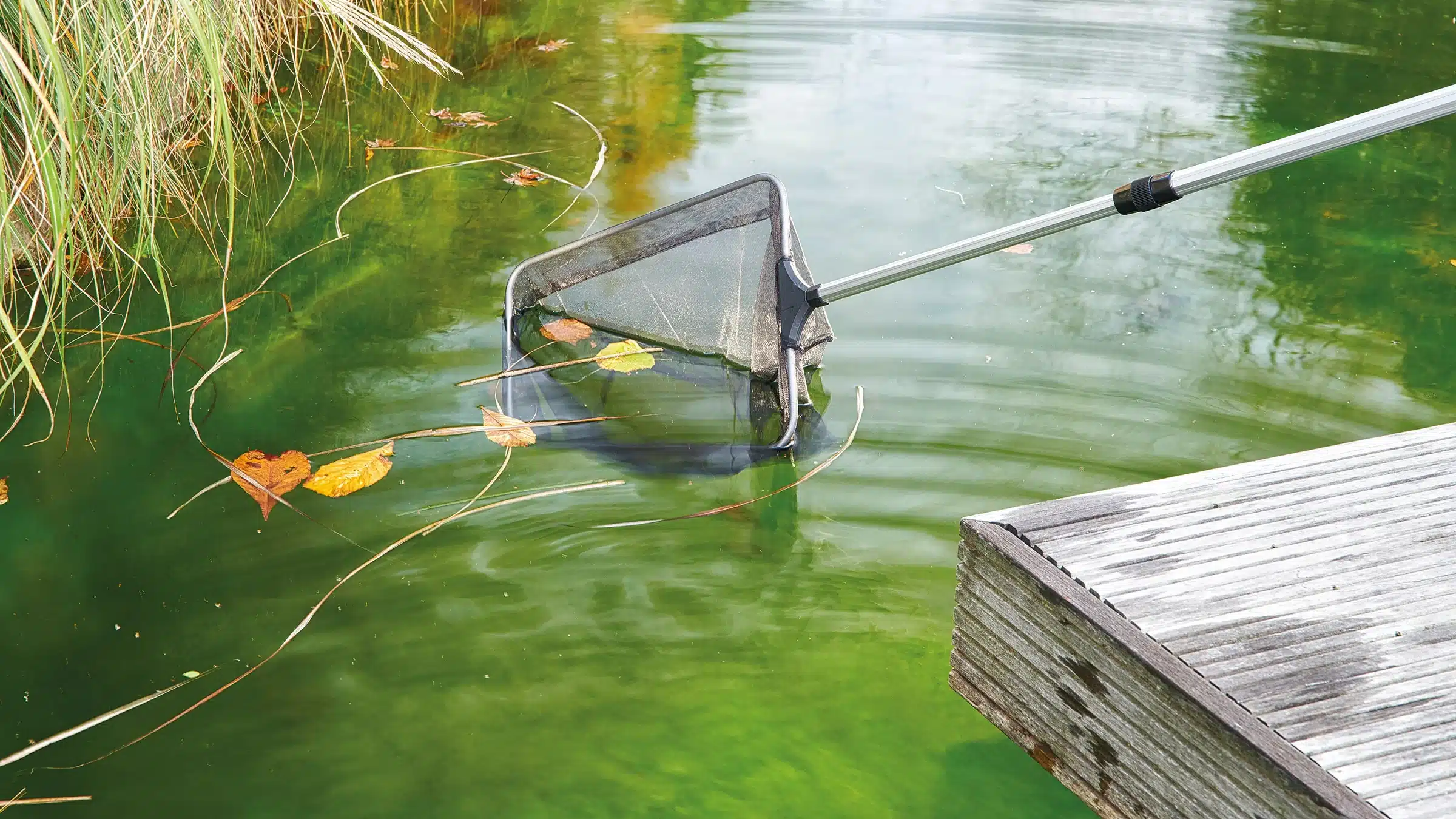
Leaves and organic debris will likely find their way into your pond. If not managed properly, this debris can decompose, negatively impacting water quality by lowering oxygen levels and increasing harmful substances like ammonia.
- Remove Debris Regularly: Skim leaves, twigs, and other debris from the pond’s surface as often as possible. Install netting over the pond if it’s located near trees that shed heavily.
- Clean Out Filters and Aerators: Ensure that your filtration system and aerators are functioning properly and are free of debris. A well-maintained aeration system will help oxygenate the water as temperatures drop, supporting your fish’s respiratory needs.
- Inspect the Pond Liner and Structure: Before winter arrives, check the pond’s structural integrity. Inspect the liner for tears or leaks and repair any damage. If your pond has built-in equipment like pumps, ensure they are in good working order before they face freezing temperatures.

Water Quality Monitoring
Maintaining good water quality is essential for fish health during the colder months. As temperatures cool, fish will spend more time near the bottom, so keeping the water well-oxygenated and clean is crucial.
- Monitor Oxygen Levels: Cold water can hold more dissolved oxygen than warm water, which is beneficial for species like trout. However, in ponds that freeze over, oxygen levels can quickly drop if the pond is sealed by ice. Use an aeration system or de-icer to keep part of the pond ice-free and allow gas exchange.
- Check pH Levels and Ammonia: As fish metabolism slows, waste buildup can still affect water quality. Regularly test the water for pH and ammonia levels. Ideally, the pH should remain between 6.5 and 8.5, and ammonia levels should be as close to zero as possible.
- Reduce Pond Depth in Shallow Areas: If your pond has shallow areas that could freeze solid, consider lowering the water level slightly to prevent fish from getting trapped in ice zones. Deeper water is more stable during temperature fluctuations.


Fish Health and Stock Management
Monitoring fish health in the fall ensures they enter winter strong and resilient. Preparing your stock properly can help reduce stress and prevent winter-related health issues.
- Observe Fish Behavior: Pay attention to any unusual behavior, such as sluggish movement or erratic swimming, which could indicate stress or illness. Infected or weak fish are less likely to survive the winter, so addressing health issues now is crucial.
- Consider Stocking or Harvesting: Fall is often an ideal time to stock or harvest fish. Stocking during autumn allows fish to acclimate to cooler temperatures before winter sets in. If you have fish that are near harvest size, it may be better to harvest them before winter, when growth slows significantly.
- Quarantine New Stock: If introducing new fish in the fall, quarantine them first to ensure they’re disease-free. This will help protect your existing stock from illnesses that could spread during the winter months.
Winterizing Pond Equipment
Before winter hits, it’s crucial to prepare all pond equipment for freezing temperatures. This is particularly important for systems like pumps, aerators, and filters.
- Remove or Insulate Pumps: For ponds with pumps that aren’t designed to run in freezing temperatures, remove them from the pond before the first frost. If you plan to keep pumps running through winter, insulate them and check for any manufacturer recommendations on cold-weather operation.
- Install a Pond Heater or De-Icer: In regions where ponds freeze over, a pond heater or de-icer can prevent total ice cover. Keeping a small hole open in the ice allows harmful gases to escape and oxygen to enter, helping fish survive the winter months.


By taking these steps now, you’ll help ensure that your fish are healthy and that your pond is ready for the colder months. With proper care, species like trout, bass, and koi can survive and thrive through winter, emerging in good condition come spring.